

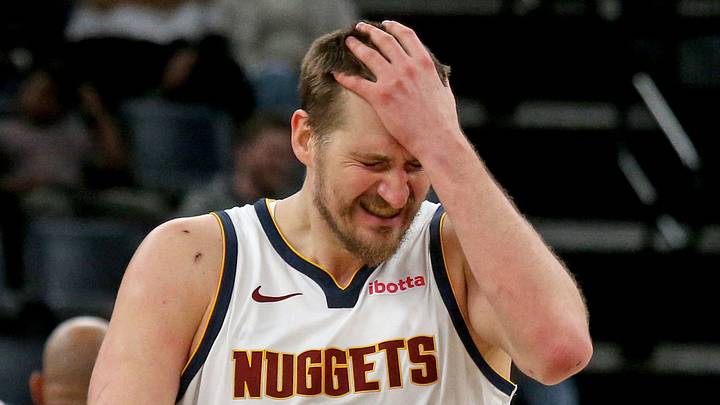
The Denver Nuggets were backed into a corner when the Oklahoma City Thunder extended an offer sheet to Spencer Jones. The Nuggets ultimately had to choose between letting a key player walk and matching the offer and thus entering the second apron.
Though the finger has been pointed at Oklahoma City, the harsh reality is that Denver did all of this to itself with its inactivity, poor asset and cap management, and lackluster draft results.
Denver entered the offseason with a tall task already ahead of it. Coming off of a first-round exit that marked three consecutive seasons without reaching the Conference Finals, the Nuggets needed to make meaningful improvements to a roster with apparent limitations.
Injuries played an unavoidable factor in the outcome of the 2025-26 season, but teams that wait to get healthy are typically passed by as their rivals improve their own rotations.
As such, many expected Denver to make meaningful changes—particularly after team president Josh Kroenke said "everything is on the table" except for trading Nikola Jokic. Fast forward to August, however, and Denver's only new additions are Marvin Bagley III, a pair of second-round picks, and 29-year-old rookie Alpha Diallo. They also lost Tim Hardaway Jr., who shot 40.7 percent from beyond the arc.
Denver had some degree of justification for its inactivity when it entered into the LeBron James sweepstakes, but it's created its own chaos through inactivity.
Nuggets' inactivity is their own fault, not the Thunder's
Re-signing Jones and restricted free agent Peyton Watson were and are rational priorities. Challenging negotiations with Watson make for a valid reason to be in something of a holding pattern, as well. The harsh reality in Denver, however, is that it can only blame itself for this predicament.
The Nuggets waited until Watson's fourth season to give him a meaningful offensive workload and are now being forced to answer a self-imposed question: How much is a 54-game sample size worth?
Denver could've excused an overpay if it hadn't given Christian Braun a five-year, $125 million contract extension after his very first season as a starter. They may have been able to manage it nevertheless had they not signed Michael Porter Jr. to a full rookie max extension after just two seasons of availability. Unfortunately, they owe Braun big money and had to find a similar salary to Porter's monster figure to offload him.
Denver ultimately brought in Cameron Johnson to replace Porter, only for him to miss 28 games—much as he missed 25 in 2024-25, 24 in 2023-24, and 40 in 2022-23.
Each of these developments has limited the Nuggets' financial flexibility—and each resemble an overzealous pursuit of instant resolutions to long-term problems. Denver wasn't content to negotiate with its key players when they needed to value sample size, but instead panicked into hoping flashes of brilliance would be enough to help Nikola Jokic win.
Now that the Nuggets are actually willing to play hardball with Watson, their past mistakes are catching up to them. Oklahoma City backing them into a corner was a symptom, not the cause.
 Add us as a preferred source on Google