

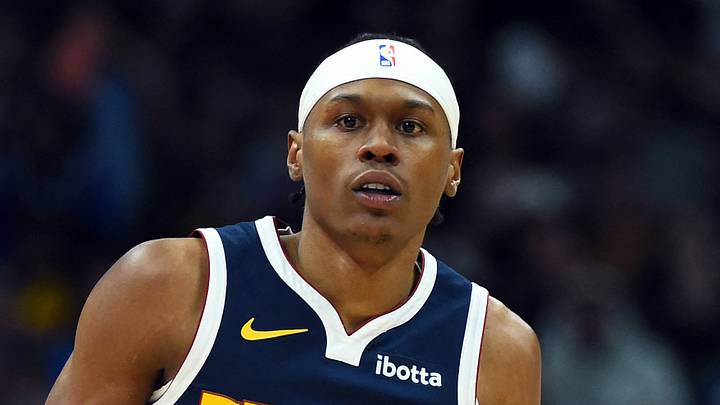
The Denver Nuggets were flamed for sending Peyton Watson to the Cavaliers in a sign-and-trade deal over the summer, where he signed a four-year, $88 million contract. So far, though, he hasn't given his old team a reason to miss him.
Unfortunately, shortly before Cleveland took on Oklahoma City on Monday, the Cavaliers ruled Watson out with right hamstring tightness. Kenny Atkinson said that the team wasn't "overly concerned" about it, but the wing is listed as out for Wednesday's second straight contest against the Thunder.
That seems concerning.
It's the same hamstring that limited him to 54 games with the Nuggets in 2025-26 and in the first-round series against the Timberwolves, adding another layer of concern for the Cavaliers that traded for Watson because he was the wing they had been searching for.
They believed he could help make their title aspirations a reality (it has a lot more to do with than just Watson), and whether he can will determine the return on their investment in the 24-year-old.
Cavaliers need Peyton Watson to live up to expectations
He didn't give Cleveland the consistent scoring touch it needed in the six games he played before being sidelined. He's averaging 10.8 points per game on 37.1 percent shooting from the field and 16.7 percent from three.
Watson had three straight games in which he scored in double digits, posting a season-high 22 points against the Wizards, then followed that with a combined nine points in each of the next two games, shooting 3-for-14 from the field.
He's still trying to find his flow within the offense, and when he's back on the floor, that will mean being more assertive. Watson is averaging 10.3 shot attempts per game, slightly down from 10.8 last season with the Nuggets. Denver was asking more of him with all its injuries, but that's what Cleveland needs from him now, nightly.
The Cavaliers need to see that Watson can do that. He hasn't shown that he can do that consistently. He earned his contract based on his numbers from last January, but Cleveland needs that version of the player to last eight months. That means more than getting downhill and opening up the offense; it means knocking down threes (he's made only four this season).
Watson won't get by in Cleveland on defense alone—he has to be a two-way threat. We saw flashes of that player in Denver, but the question is whether he can be that player full-time.
Rather than go into the second tax apron to let Watson prove it, the Nuggets decided it was best to send him to the Cavaliers in exchange for an unprotected first-round pick. It will be a while before anyone can say definitively which team won that trade, but for now, the pressure isn't on Denver for reasons beyond his availability (which, to be clear, is very important).
 Add us as a preferred source on Google