

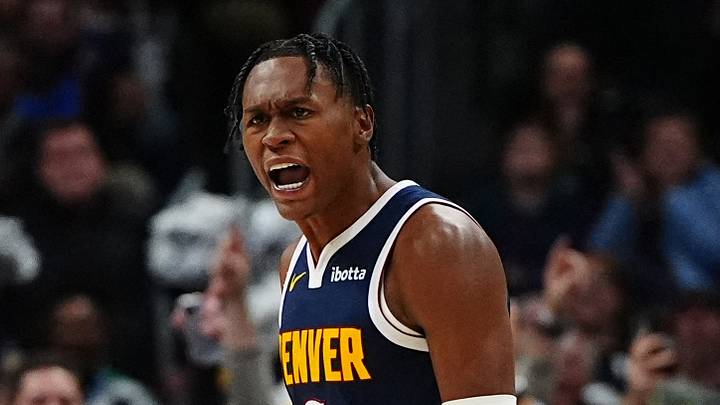
The Denver Nuggets and Peyton Watson were never close during their negotiations with the restricted free agent forward. And now, after a couple of other free agent wing signings were made, the Nuggets' decision to trade him looks even better, and they could have potentially avoided an overpaying disaster in the process.
Don't get me wrong, Watson has a lot of upside and promise. He's not only been a proven good defender, especially on the perimeter, but he also showed last season that his offensive game was rounding into form. But was he really worth THAT much more money per year than the other marquee wings on the free agency market?
The Nuggets avoided a potential large overpay to Watson
Jonathan Kuminga and Benedict Mathurin, who were both listed alongside Watson all summer as comps on the free agent wing market, were both signed for far less money on their contracts than Watson. Watson ended up with a four-year, $88 million deal with the Cleveland Cavaliers, good for a $22 million average annual value.
BREAKING: Jonathan Kuminga has agreed to a two-year, $13 million deal with the Minnesota Timberwolves, plus a player option, agent Aaron Turner tells ESPN. Kuminga will be a starter alongside Anthony Edwards, LaMelo Ball, Jaden McDaniels and Rudy Gobert on the West contender. pic.twitter.com/KdtD6YEy9j
— Shams Charania (@ShamsCharania) August 26, 2026
But Kuminga just signed a bargain-bin two-year, $13 million deal with the Minnesota Timberwolves, with a $ 6.5 million average annual value. Basically the same deal that the Nuggets matched on Spencer Jones. It's definitely a bet on himself and a great deal for the Wolves, but a bargain in case he flops, nonetheless.
Another comparable wing, restricted free agent Bennedict Mathurin, was just signed by the New Orleans Pelicans for two years, $16 million. An average annual value of $8 million. Mathurin has been in the league for four years, just like Watson, and has been a consistent scorer and good rebounder all four years. He scored 17.6 points just last year in split time with the Indiana Pacers and Los Angeles Clippers.
Finally, the first warning sign that the market wasn't favorable for young wings this year was Tari Eason, who extended with the Houston Rockets for five years, $81.5 million. An average annual value of $16.3 million. Eason was touted for his defense, like Watson, but he set the bar early on in the process with his contract.
Had the Nuggets even signed Watson for the rumored offer of four years for $70 million, at $17.5 million average annual value, he would have been an overpay based on the comps coming in.
The Nuggets didn't need another bad contract
Watson is a great defender, but his offensive hype was based on the 15-game run he had last January while Nikola Jokic and other starters were sidelined. He stepped up when given the chance and got himself a new contract off of that hot month. But what if he didn't work out? The Nuggets already have two bad contracts in Christian Braun and Zeke Nnaji. They didn't need a third.
Kudos to the Nuggets for holding their ground. They obviously had a line in the sand on the dollar amount they were comfortable paying Watson. And they may have avoided a disaster overpay of a contract because of it.
 Add us as a preferred source on Google